
The operator's liability in the case of an incident is limited to 3,000 crore for reactors with thermal power above 3,600 Megawatt; 1,500 crore for reactors with thermal power between 1,500 Mw and 3,600 Mw; 750 crore for reactors with thermal power between 750 Mw and 1,500 Mw; 300 crore for reactors with thermal power between 150 Mw and 750 Mw; and 100 crore for reactors having thermal power up to 150 Mw, fuel cycle facilities other than spent fuel reprocessing plants and transportation of nuclear materials.

West Bengal Chief Minister Mamata Banerjee has accused central forces of searching her car and criticised the BJP for alleged election misconduct during a rally in Islampur, Uttar Dinajpur district.

The All India Muslim Personal Law Board (AIMPLB) has urged Muslims to wear a black armband on their right hand during Juma prayers on the last Friday of Ramzan as a mark of protest against the Waqf (Amendment) Bill. The AIMPLB has been vocal in its opposition to the Bill, calling it "controversial, discriminatory and damaging." The organization has planned nationwide protests against the Bill, with large sit-ins scheduled in several cities.

The idea is to establish a robust and forward-looking legal framework that addresses the financial stress of power distribution companies, which are facing losses of over 6.9 trillion, while curbing high industrial tariffs that, according to the government, have affected competitiveness, constrained economic growth, and slowed the transition to clean energy.

'Even if this Bill passes in Parliament, it will reasonably face judicial scrutiny. 'One can reasonably expect challenges in the Supreme Court questioning its Constitutional validity.'

The Supreme Court on Thursday held that the Governor can reserve a bill for consideration of the President even in the second instance, when the bill is again sent by the state assembly to him whether in its amended or unamended form.

Opposition parties allege the Modi government is attempting to turn India into a 'dictatorship' with the introduction of three Bills that seek to provide for removal of the prime minister, chief ministers and ministers arrested on serious charges, and vowed to oppose it 'tooth and nail'.
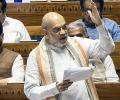
Only four working days are left for the ongoing budget session to come to an end on April 4.

Parliamentary Affairs Minister Kiren Rijiju feels that the National Sports Governance Bill, which is set to be tabled in the monsoon session beginning on Monday, will usher in a 'new era' for sports in India.

The Reserve Bank of India (RBI) has unveiled draft norms for branch authorisation and business correspondents (BCs), introducing a two-tiered classification for BCs and redefining 'banking outlets' to include BC-Banking Outlets (BC-BOs), aiming to expand formal banking presence, particularly in rural areas.
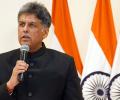
Congress MP Manish Tewari has introduced a bill in Lok Sabha that seeks to allow parliamentarians to take an independent line in voting on bills and motions other than those affecting the government's stability in a bid to free them from "whip-driven tyranny" and promote "good lawmaking".

The Central Board of Indirect Taxes and Customs (CBIC) has eliminated the Rs 10 lakh value cap per consignment for courier-based commercial exports, effective April 1, aiming to significantly boost e-commerce shipments, particularly for MSMEs and artisans.

The Assam assembly on Thursday passed a bill to ban polygamy, making it an offence which may lead to a maximum of 10 years of imprisonment, barring some exceptions.
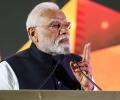
Prime Minister Narendra Modi hailed the passage of the Waqf (Amendment) Bill in Parliament as a "watershed moment" in the country's quest for socio-economic justice, transparency and inclusive growth. He said the legislation will particularly help those who have long remained on the margins, thus being denied both voice and opportunity. Modi stated that the Waqf system was synonymous with lack of transparency and accountability, especially harming Muslim women, poor Muslims and Pasmanda Muslims. He added that the legislation will boost transparency and safeguard people's rights, ushering in a more modern and socially just framework. The prime minister thanked all members of Parliament and the public for their contributions to the legislation.

The state government, however, maintained it has no intimation so far from the central government or the governor's office regarding their "observations" on certain provisions in the Bill.

The new Income Tax Bill, passed by Lok Sabha on Monday, has retained the provisions regarding ITR filing for TDS claims and tax exemptions for anonymous donations made to all religious-cum-charitable trusts, as in the existing tax laws. The original Income Tax Bill, which was brought in Parliament in February, had done away with this exemption and the ITR filing flexibility for claiming TDS refunds.
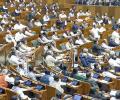
The government has deferred the introduction of bills related to 'one nation one election' in the Lok Sabha till after the completion of financial business, sources said.

Sports Bill will end stagnation; bring in transparency: PT Usha in Rajya Sabha

It provides for a broad-based composition of the Central Waqf Council and the State Waqf Boards and ensures the representation of Muslim women and non-Muslims in such bodies.
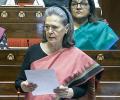
Congress Parliamentary Party chairperson Sonia Gandhi has criticized the Waqf (Amendment) Bill, calling it a 'brazen assault' on the Constitution and part of the BJP's strategy to keep society in a 'permanent state of polarization.' She also spoke out against the One Nation, One Election Bill, calling it a 'subversion of the Constitution.' Gandhi further accused the Modi government of ignoring the women's reservation bill and other demands for reservation, and of 'dragging the country into an abyss' where the Constitution will only exist on paper. She also criticized the government for limiting the speaking time of the Leader of the Opposition in Parliament and for not allowing discussions on important issues like the working of the defense and external affairs ministries and the challenges posed by China on the border.

Various stakeholders told the committee that there is a need for expanding judicial capacity or restructuring the adjudicatory process by increasing the number of benches and also enhancing financial allocation for improvement of infrastructure.

Hours after the Waqf (Amendment) Bill was passed in Parliament, 50 individuals embroiled in land disputes in Kerala's Munambam joined the BJP, hoping for a resolution to their claims. The residents, who have been protesting for 174 days, allege that the Waqf Board is claiming ownership of their properties. BJP leader Rajeev Chandrasekhar assured them of the party's support and a meeting with Prime Minister Narendra Modi to express gratitude. The BJP capitalized on the Catholic Church's support for the legislation, accusing the Congress and the Left of appeasement politics. The opposition, however, questioned the impact of the bill on the Munambam issue.

The ambitious proposal by the power ministry to allow network sharing between distribution licensees operating in the same geographical area will face three key challenges, said a former bureaucrat.
The Lok Sabha on Tuesday passed the Finance Bill 2025, along with 35 government amendments, including one that abolishes a 6 per cent digital tax on online advertisements.

Union Home Minister Amit Shah introduced bills in Lok Sabha addressing the removal of arrested PMs, CMs, and ministers, sparking opposition protests. Shah emphasized the need for public decision on whether leaders should govern from jail, criticizing the Congress party's stance on the matter.

Uttar Pradesh Chief Minister Yogi Adityanath on Sunday condemned the violence in West Bengal's Murshidabad district following the passage of the Waqf (Amendment) Bill, accusing the opposition of instigating the violence. He also criticized the opposition for their alleged silence over the persecution of Hindus in Bangladesh and emphasized the BJP's commitment to protecting Hindus.

Congress MP Mohammad Jawed and AIMIM president Asaduddin Owaisi have challenged the validity of the Waqf (Amendment) Bill, 2025 in the Supreme Court, arguing that it violates constitutional provisions. The petitions claim the bill imposes arbitrary restrictions on Waqf properties and their management, undermining the religious autonomy of the Muslim community. They also allege that the bill discriminates against Muslims by imposing restrictions not present in the governance of other religious endowments. The bill was passed in the Rajya Sabha and Lok Sabha, with the petitioners arguing that it introduces limitations on the creation of Waqfs based on the duration of one's religious practice, mandates inclusion of non-Muslim members in Waqf administrative bodies, and shifts key administrative functions to government officials, thereby diluting the autonomy of Waqf management.

'If a charitable or religious trust sells a capital asset -- such as land, buildings, shares -- and makes a capital gain, it can avoid paying tax on that gain if it reinvests the proceeds in another capital asset for its charitable purposes.'

The matter would be heard by Chief Justice B R Gavai and Justice Augustine George Masih.

The first leg of the Budget session concluded with debates over the India-US trade deal and a former army chief's memoir, and will reassemble on March 9.

The Union Cabinet has reportedly approved the Kerala government's proposal to officially change the state's name to Keralam, following a resolution passed by the Kerala Assembly.
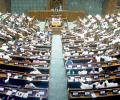
Parliament's approval of the Waqf (Amendment) Bill, a contentious piece of legislation aimed at reforming Waqf bodies, has sparked strong reactions from the opposition, who allege that the bill was "bulldozed" through Parliament. The bill, considered the government's most consequential legislation in its third term, was passed with comfortable majorities in both the Lok Sabha and Rajya Sabha despite opposition claims of a lack of consultation and an intrusion into religious affairs. Other notable bills approved during the session included the Finance Bill, Appropriation Bill, Immigration and Foreigners Bill, and Tribhuvan Sahkari University Bill. The session, which saw high productivity, also witnessed debates on issues such as economic distress, delimitation, and the three-language policy. While the government touted its achievements, the opposition criticized the government's approach and vowed to challenge the Waqf bill in court.
'It is not as if Hindus are not being touched at all, and only Muslims are.'

As Parliament gears up for a stormy start next week over the Adani issue, the government has listed 16 bills, including one to amend the waqf law and five new ones, for the winter session.

US Representative Greg Steube, a Republican from Florida, introduced the 'Ending Exploitative Imported Labour Exemptions Act or EXILE Act', a bill that would amend the Immigration and Nationality Act by ending the H-1B visa programme.

Law Minister Ravi Shankar Prasad on Saturday hinted that the Narendra Modi government will rework on a constitutional amendment bill introduced by the previous dispensation which seeks to give the executive a say in appointment of judges.

The Lok Sabha witnessed chaotic scenes as opposition members protested the introduction of three draft laws, leading to torn bills, sloganeering, and adjournments.

'Of course, we are secular. Three of our Hindu brothers have won seats from our party. Tell me where AIMIM has managed that.'

The Lok Sabha rejected a resolution seeking the removal of Om Birla as Speaker by a voice vote amidst opposition protests and demands for an apology from Home Minister Amit Shah.

A bill to amend a four-decade-old law, which proposes to allow Indian legal heirs to inherit the properties of relatives who migrated to Pakistan after Partition, was on Monday introduced in the Lok Sabha.
